
Jewish lecturers at the Wismar Academy of Engineering
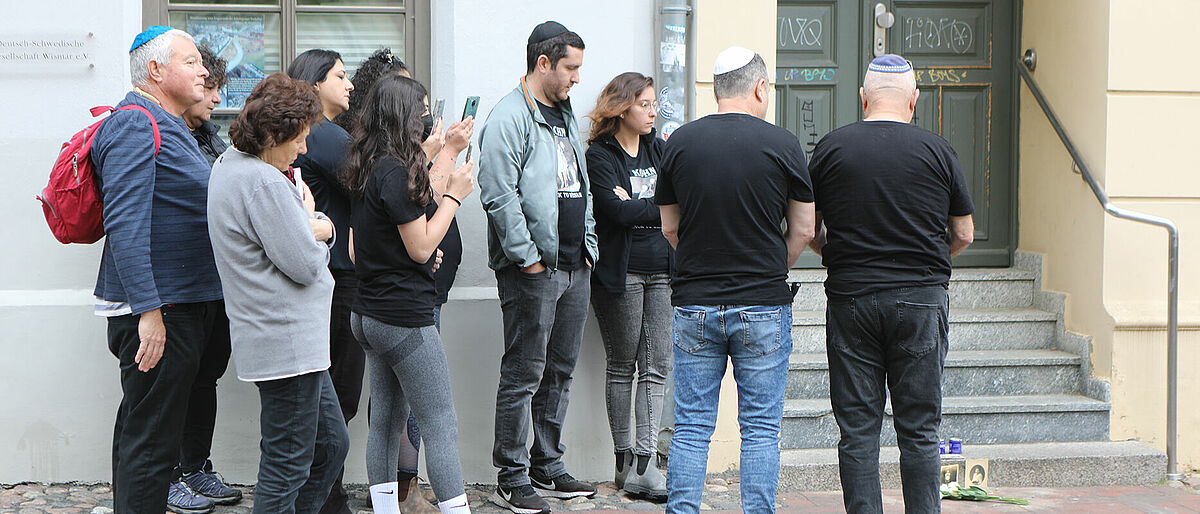
Stumbling stone laying ceremony
In memory of Dr Adolf Weingarten, Dr Felix Kann and Dipl.-Ing. Herbert Kohn
It is a dark chapter in our history, the history of one of our predecessor institutions, which includes anti-Semitic agitation and persecution of people of Jewish origin after the National Socialists seized power. Therefore, in memory of three scientists who worked at the Wismar Engineering Academy, stumbling stones were laid in the Hanseatic city of Wismar on Tuesday, 24 May 2022, in the presence of the rector of our UAS, Prof. Dr. Bodo Wiegand-Hoffmeister. The biographies of Dr. Adold Weingarten, Dr. Felix Kann and Dipl. Ing Herbert Kohn were presented by schoolchildren from the Gerhart Hauptmann Gymnasium, and the laying of the memorial stones was accompanied by violin music performed by artist Gunter Demnig. Family members from Israel and Austria were also present, praying and singing together in Hebrew.
Dr. Adolf Weingarten
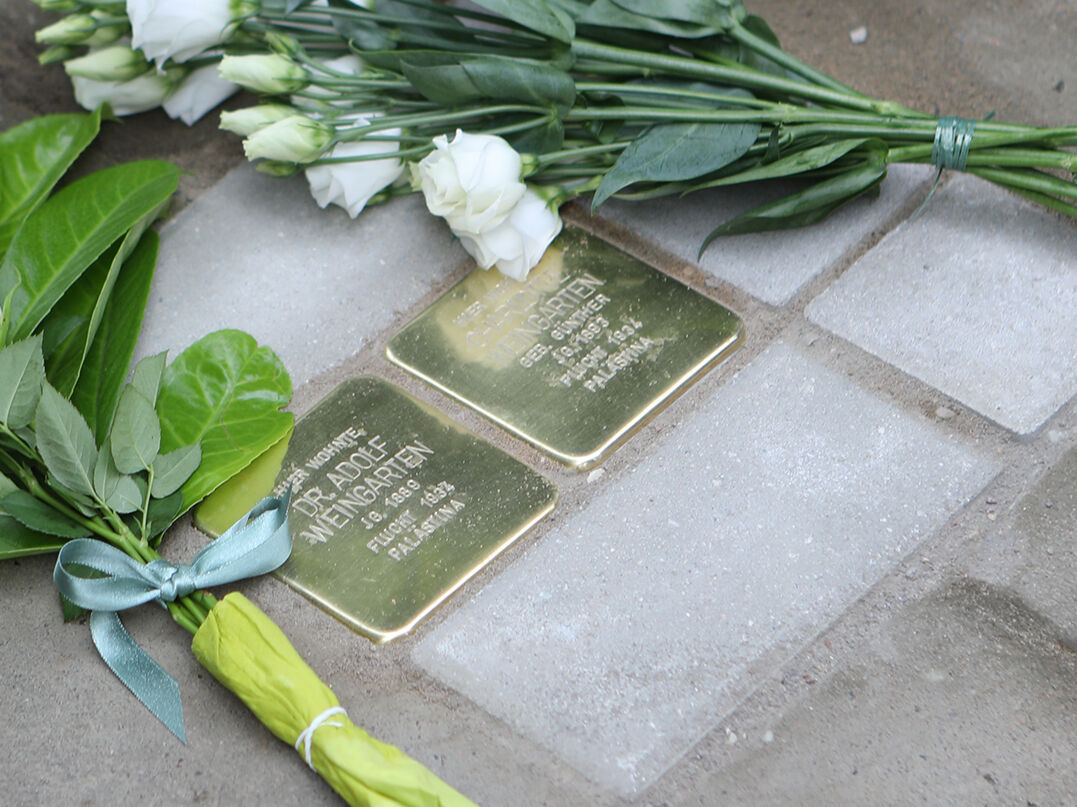
Dr. Adolf Weingarten (1889-1967) worked in Wismar from 1925 to 1933, was a municipal building officer and played an important role in various areas of the city. In 1925, he became director of Maschinenfabrik Podeus A.G. After its closure in 1928, he worked as a lecturer and, from 1930, as director of the Wismar Academy of Engineering. As an engineer with wide-ranging experience and a doctorate in aircraft construction, he took over and developed the subject area of ‘lightweight construction, motor vehicle and aircraft construction’ in 1928, among other subjects. In the autumn of 1931, following an anti-Semitic smear campaign against him, Weingarten resigned as director on the advice of the council assembly, but remained at the academy as a lecturer. He was dismissed at the beginning of 1933 – immediately after the National Socialists seized power and even before the enactment of the ‘Law for the Restoration of the Professional Civil Service’ of 7 April 1933. This was only used retrospectively to justify his dismissal and was also applied to his colleagues, Prof. Dr. Felix Kann (1883-1939) and Dipl.-Ing. Herbert Kohn (1888-1958), who were dismissed from the academy in 1933 and 1937 respectively.
Dr Adolf Weingarten went into exile in Palestine with his wife and returned to Germany in 1949. The couple had no children.
Dr. Felix Kann
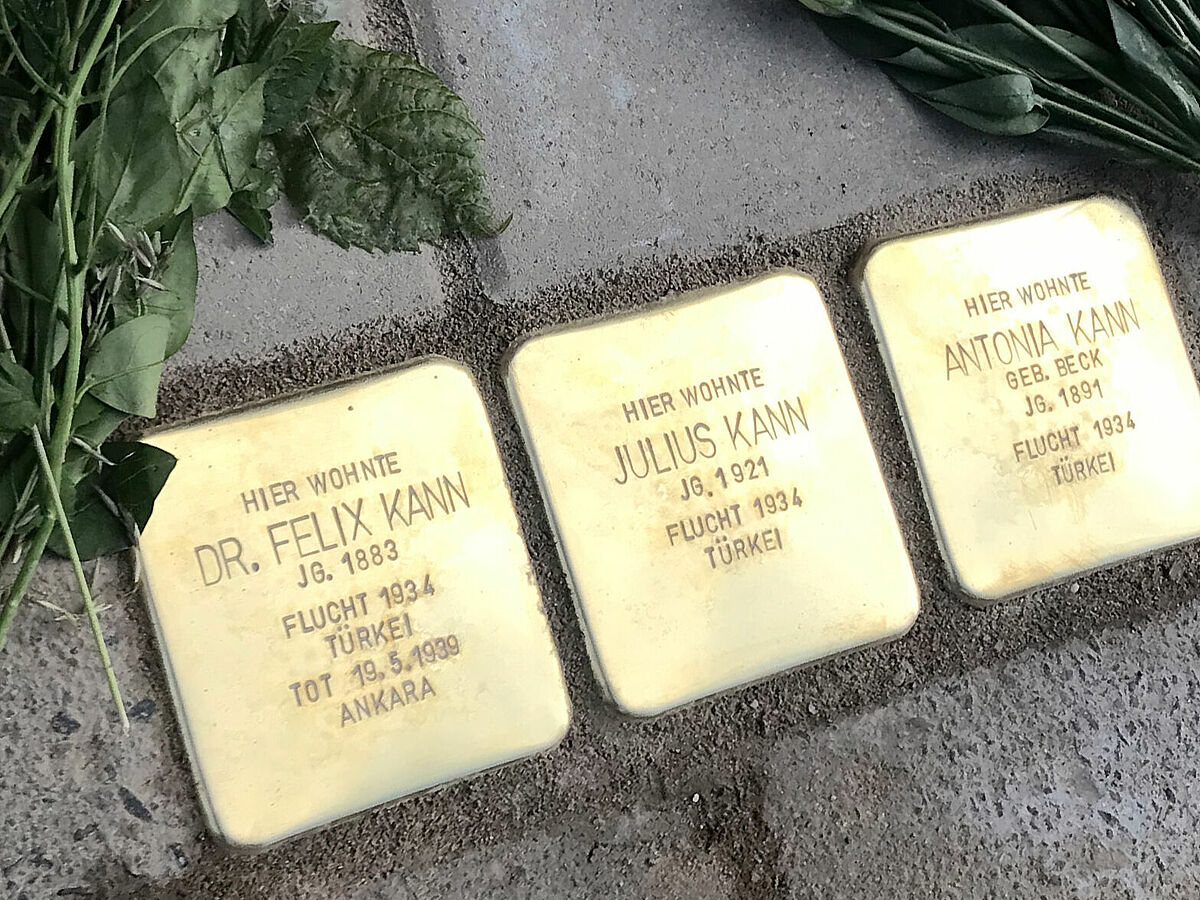
Dr Felix Kann resigns from his position as chief engineer at Paul Kossel in Bremen to take up a teaching post at the Engineering Academy, where he begins lecturing in structural statics and reinforced concrete construction on 1 November 1922. Shortly afterwards, his wife Antonia and their two-year-old son Julius join him.
Dr Felix Kann taught at the academy with great seriousness and personal commitment. He also published a series of books and articles in specialist journals and took part in scientific congresses. In 1927, he also became a private lecturer at the Technical University of Braunschweig, where he qualified as a professor in the same year.
Due to his ‘non-Aryan’ ancestry, Prof. Dr. Felix Kann initially lost his teaching position in Braunschweig in the summer of 1933. In September, the National Socialist German Students' League also made its presence felt here in Wismar, demanding: ‘It is in the interest of the student body that [Prof. Kann] immediately disappear from the Engineering Academy so that education and training in the National Socialist spirit can be guaranteed. Heil Hitler!’ At the end of September, Kann received his notice of termination.
Prof. Dr. Felix Kann emigrated with his family to Turkey, where he died in 1939. His descendants now live in Austria.
Dipl.-Ing. Herbert Kohn
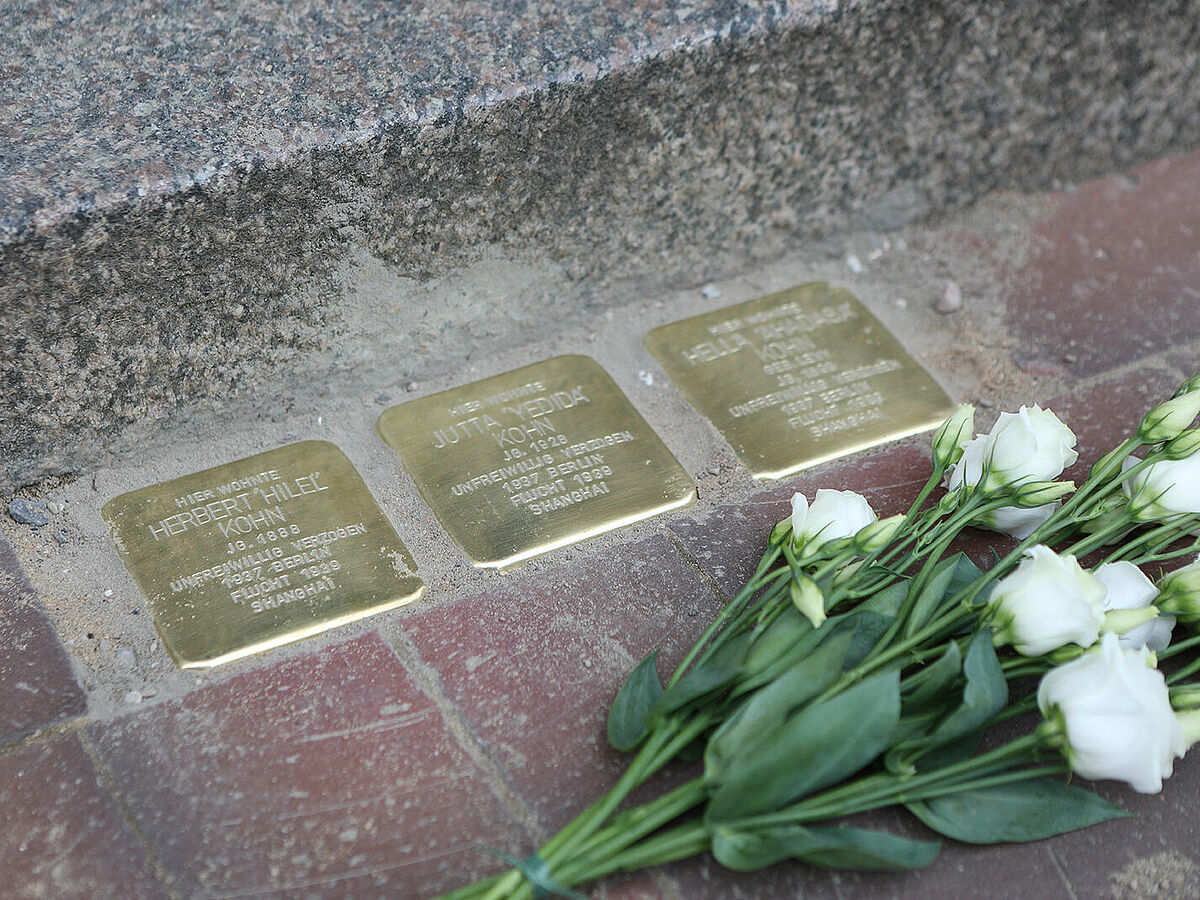
Also in 1922, Herbert Kohn, a graduate engineer, began working as a lecturer at the Engineering Academy, teaching mechanical engineering. Until then, Kohn had been technical director at Eisenwerke-AG Düsseldorf-Telgte. As a lecturer, he was highly regarded for his expertise: ‘Mr Kohn's teaching was always up to date with the latest technology and at university level.’
After his Jewish colleagues were dismissed, Herbert Kohn was initially allowed to stay. Nevertheless, he was under pressure: in 1934, Kohn was asked to make his workshop available to the academy. If he did not do so, his position as a lecturer would be jeopardised. Kohn had to give in. Two years later, he was dismissed anyway. In December 1936, he had no choice but to sell his workshop and all of its machinery to the academy for 1,400 Reichsmarks. The machines alone had a purchase value of 12,000 Reichsmarks. Mayor Pleuger wrote him a reference: Municipal building officer Kohn was "always selflessly committed to the institution and, putting aside his personal interests, spent a large part of his free time completing the tasks that had been assigned to him or that he had taken on himself. Mr Kohn has always been very successful in his teaching. He was respected by his colleagues and students as a skilled educator. He kept himself up to date by studying specialist literature intensively. Mr Kohn left the Engineering Academy as a result of racial legislation. The Kohn family moved to Berlin at the beginning of 1937.
In 1938, Herbert Kohn and his family fled to China, where they survived the Holocaust. His descendants now live in Israel.
The Friends of Wismar UAS Association (Förderkreis der Hochschule Wismar) contributed a total of €960 towards the production of eight Stolpersteine for the three former lecturers of Jewish origin and their family members.