Hydrogen in the natural gas pipeline allows the storage of renewable electrical energy. This is an option for decarbonization and climate protection. However, this is expected to lead to significant fluctuations in the calorific value of the hydrogen in the distribution network. A secure supply and fair, energy-based pricing require the use of suitable sensors that enable decentralized measurements close to the consumer. Current methods are too expensive and complex for widespread application.
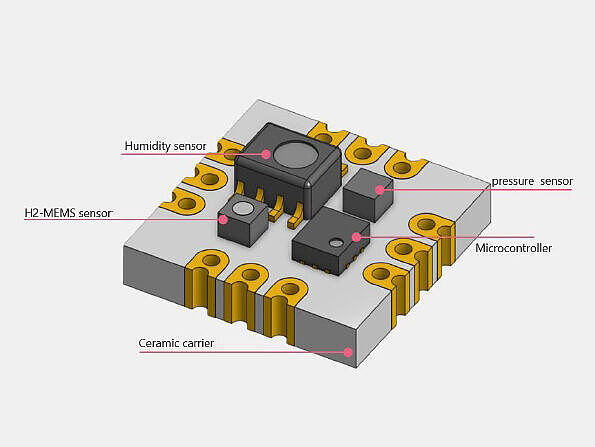
The Sens2NET consortium proposes a new concept based on the selective measurement of hydrogen concentration in the gas mixture and real-time data analysis. The starting point is a novel H2-MEMS sensor. The targeted smart sensor solution consists of a sensor array with additional microsensors (temperature, pressure, relative humidity) to eliminate complex environmental influences.
The sensor data collected in the project will first be systematically cleaned, normalized, and exploratorily analyzed to identify patterns, outliers, and statistical correlations. Based on this foundation and incorporating physicochemical findings, the key factors influencing hydrogen concentration are determined. Building upon this, hybrid simulation models are developed that combine both theoretical approaches and data-driven machine learning methods to represent the influence of gas composition and operating conditions and to reliably predict the hydrogen content. The models are comprehensively validated using reference data and evaluated for accuracy, robustness and scalability. The modells will be technically optimized for stable and efficient use in real-time applications.