The Paris Climate Agreement commits the signatory parties to limiting global warming to well below 2 °C. The EU responded with the Green Deal, which aims for climate neutrality by 2050. As a result, greenhouse gas emissions are also coming under greater scrutiny in Germany. However, decarbonization requires a massive expansion of renewable energy. At the same time, geopolitical crises are increasing the pressure to make energy supplies more independent. Since domestic expansion cannot meet demand in the long term, Germany remains dependent on energy imports.
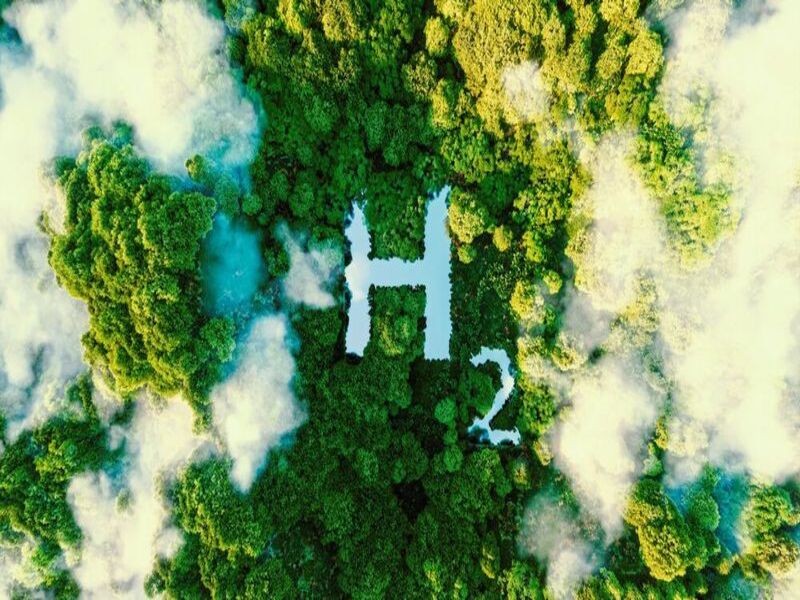
Depending on the location, an imbalance arises between energy supply and demand. Regions with abundant sun or wind generate more energy than they need themselves. This energy can be converted into hydrogen, traded globally, and used for energy or as a feedstock. Hydrogen also enables the temporal decoupling of generation and consumption and can serve as long-term storage. Studies indicate a long-term additional storage requirement of around 41 TWh, which could be met by new cavern storage facilities.
Despite its potential, hydrogen’s low energy density and high flammability make it difficult to handle. Consequently, approaches are being developed to make the gas more suitable for chemical or physical storage. A previous study shows that formate salts are technically and economically suitable for this purpose. Hydrogen is reversibly bound to non-toxic, non-flammable salts, catalytically converted in an aqueous solution, and then crystallized, thereby achieving a high energy density. The technology requires no special equipment, is largely based on proven components, and even has a negative CO₂ footprint.
The research project now underway is developing marketable solutions for the storage and release of hydrogen using formates. A storage unit is intended to capture hydrogen in regions with excess energy, while a release unit will make it available in regions where it is needed. AKROS Energy is coordinating the project and handling the engineering of the modular prototype, while LIKAT is developing the catalyst and the Wismar University of Applied Science is working on crystallization and separation processes.