
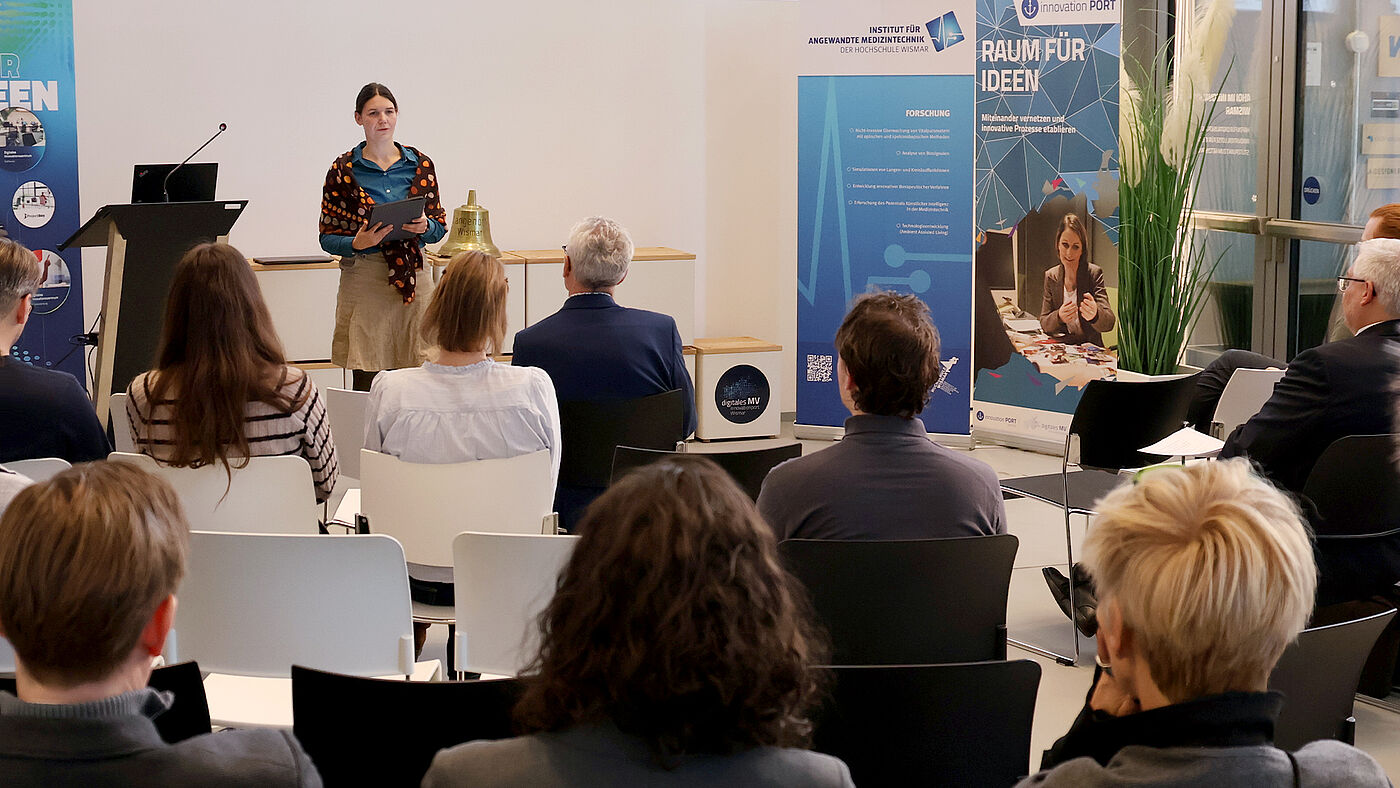


Prof. Dr Christoph Hornberger, as a consortium partner in the research project – which is receiving four years’ funding of five million euros from the EU – had invited representatives from all five participating scientific institutions to this first meeting in Wismar. The consortium partners comprise Rostock University Medical Centre, the Leibniz Institute for Plasma Science and Technology (INP), Fraunhofer IGD Rostock, Greifswald University Medical Centre and Wismar University of Applied Sciences. As part of the Target-H project, they are conducting research into innovative therapies, smart diagnostics and predictive oxidative signalling patterns, using skin cancer as a case study.
The programme included the opening address and welcome by the Rector of UAS, Prof. Dr Bodo Wiegand-Hoffmeister; Christine Rußbült from the Ministry of Science of Mecklenburg-Western Pomerania; and the host and coordinating project leaders, Prof. Dr Christoph Hornberger and Prof. Dr Steffen Emmert.
This was followed by presentations on the results achieved so far and the current work being carried out by the individual sub-projects. The reports were presented by the respective project leaders and team members from the Emmert, Hornberger, Bekeschus, Vollmar, Hinz, Murua Escobar, Radke and Aehnelt teams. After a joint lunch break, Dr Tobias Fischer, as consortium manager, supplemented the presentations by outlining the cross-cutting objectives.
This was followed by comments from the scientific advisory board and a joint discussion, before the key findings were summarised and an outlook on future collaboration was provided.